
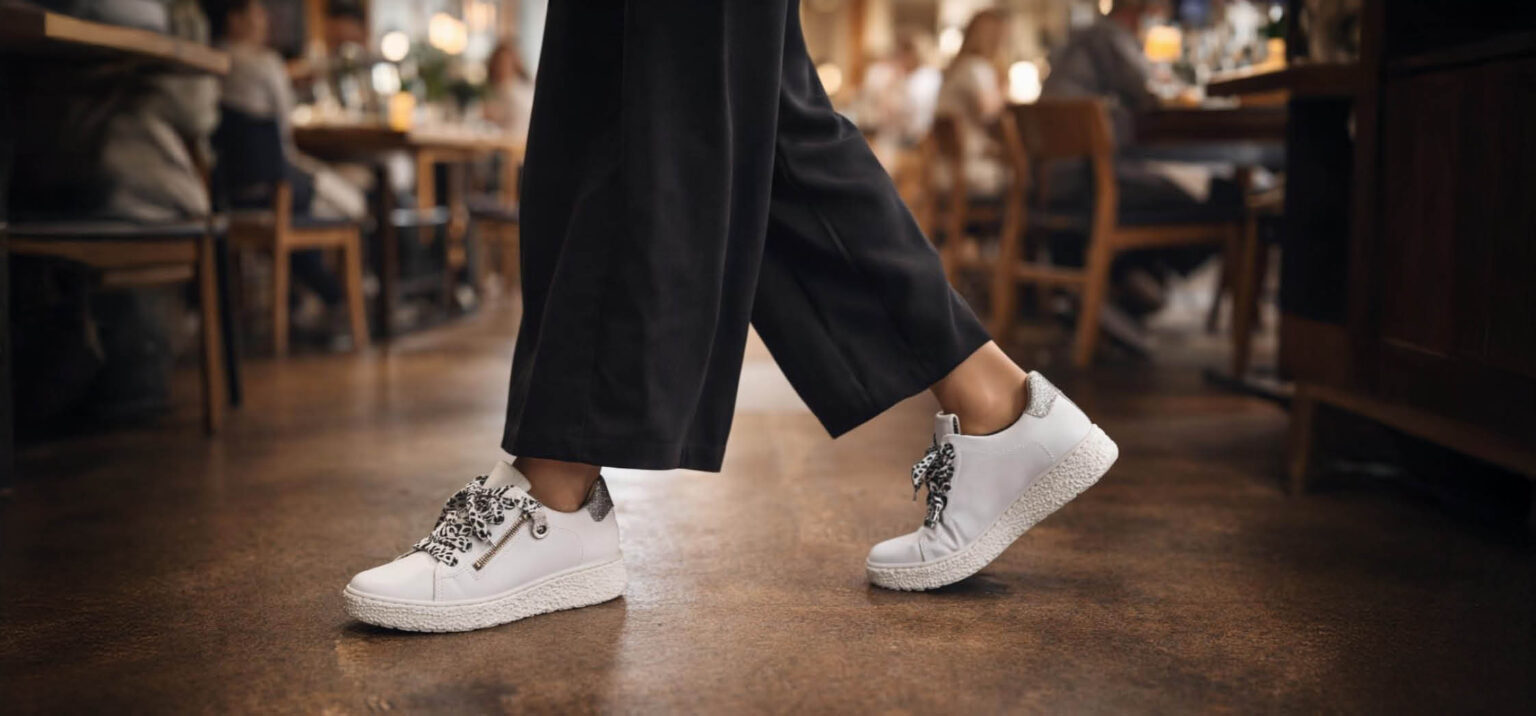
Shoes for every occasion – high-quality and comfortable shoes from Austria

In our last post, we showed how lightweight shoes can affect your well-being in everyday life. In the workplace, however, there’s another factor that’s just as important: shoes with good cushioning. After all, anyone who spends many hours on their feet or takes thousands of steps on hard floors quickly realizes just how much shoes can affect not only the feet but the entire body.
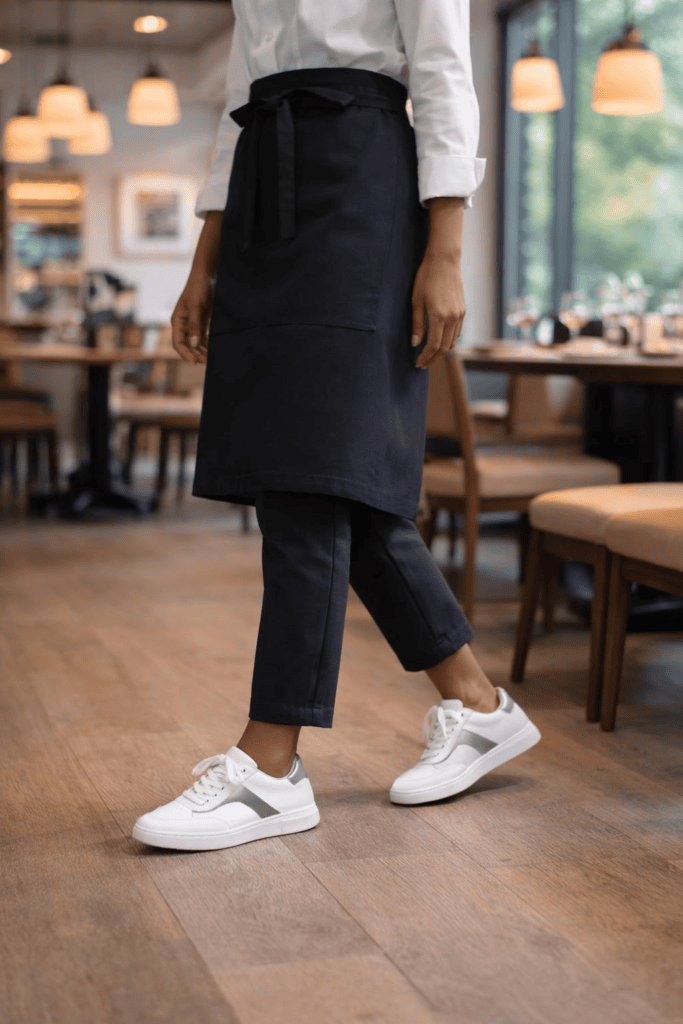
This is especially noticeable in jobs that involve a lot of movement: A server is constantly on the move during service—often at a fast pace and carrying heavy trays. A nurse or caregiver hardly ever sits down for long, moving between rooms and wards and staying on their feet for hours. It’s a similar story for many people working in retail, at reception desks, or in the classroom: long periods of standing, lots of short walks—and at the end of the day, the feeling that their feet have “carried it all.”
Good cushioning is more than just a comfortable feeling. It helps reduce impact forces that would otherwise be transmitted through the foot, knee, and hip all the way to the back. At the same time, shoes worn at work should look neat and blend seamlessly into the workday without sacrificing comfort.
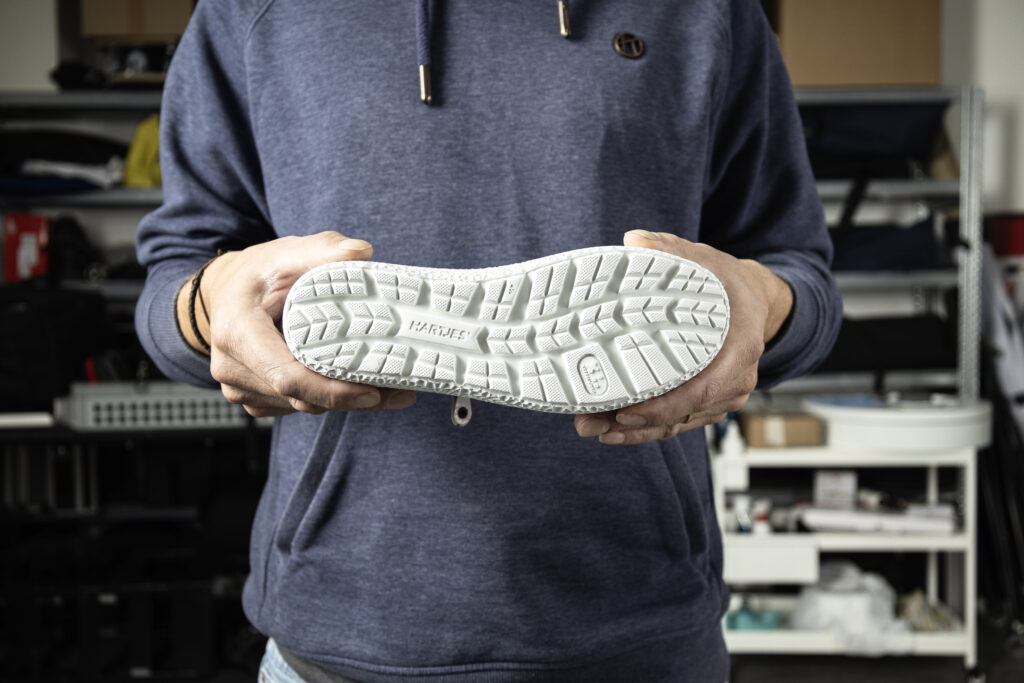
At HARTJES, we design shoes to meet exactly these needs. Our styles combine high-quality materials and contemporary designs with a sole construction that can noticeably ease the strain of everyday life. Our innovative soles, in particular, play a key role: They combine light weight, maximum flexibility, and effective cushioning, and can reduce pressure on your joints.
1. Why Shoes with Good Cushioning Are So Important in Everyday Work Life
Everyday work life puts a strain on the body not only in exceptional situations, but through repeated movements. Especially in jobs that involve long periods of standing—such as at the front desk, in retail, or at a salon—it becomes clear just how much strain hard floors place on the feet. Every step generates forces that are transmitted from the heel through the foot. On hard surfaces such as tile, concrete, asphalt, or hardwood floors, this strain is particularly noticeable. If the sole provides little cushioning, each step feels harder, and this can become tiring or even painful over the course of hours.
Good cushioning acts as a buffer between the body and the ground. It can reduce pressure spikes, make movement more comfortable, and help ensure that your feet and legs feel less “worn out” at the end of the day. What matters isn’t just whether a sole provides cushioning, but how it does so: stably, in a controlled manner, and in harmony with natural movement.
2. What Really Makes for Good Damping
When people think of cushioning, many immediately think of a soft, comfortable feel. In a professional setting, however, that’s only half the story. A sole that’s too soft can feel unstable—especially when standing for long periods. In that case, your muscles are constantly working against it, which can put a lot of strain on your body over time. Good cushioning is therefore, above all, one thing: controlled.
1) Cushioning without becoming spongy
High-quality cushioning absorbs impact forces without the shoe giving way. Your foot stays secure, even when you stay in one spot for a while or change direction frequently.
2) Even support
Cushioning shouldn’t be felt only in the heel area. Especially during a workday when you’re on your feet a lot, balanced pressure distribution helps.
3) Consistent performance over many hours
A shoe may feel great in the morning but lose its comfort significantly by the afternoon as the materials “compress.” Good cushioning remains reliable.
4) The interplay between flexibility
and cushioning is not enough on its own. If the sole is too stiff, the stride often becomes “hard.” Flexibility supports the rolling motion of the foot and thus promotes a smooth gait.
3. What to Look for When Choosing Shoes for Work
Realistically assess the surface and your daily routine
Do you spend most of your time standing on hard floors? Do you walk many short distances with frequent starts and stops? For example, people who spend a lot of time walking on tile and stone floors—such as those working in hospitals, the service industry, or retail—and who also have to stand for long periods will particularly benefit from stable, controlled cushioning. When choosing shoes with good cushioning for work, you should consider several factors.
Fit Is Key
Cushioning can only be effective if the shoe fits well. If the heel slips, your gait becomes unstable. If the forefoot is too tight, pressure points develop. Our HARTJES models are designed to combine comfort with a secure fit—because that’s the only way cushioning can deliver its full benefits.
Stability Instead of the “Cushion Effect”
Pay attention to whether you feel secure. Good cushioning absorbs shock, but it doesn’t “tip over.” This is important if you’re often on your feet or walking up and down stairs at work.
Material Quality and Durability
Durable materials help ensure that cushioning does not wear out quickly but remains reliable even with frequent use. Proven sole materials, such as EVA soles, can help effectively absorb impact forces while keeping the shoe’s weight low. Our HARTJES shoes are made exclusively from high-quality materials and carefully crafted to provide comfort that stands the test of time in everyday work life.
A quick tip: Your posture also affects the pressure on your feet. During your workday, be mindful not to put more weight on one leg for extended periods; instead, try to distribute your weight as evenly as possible.
4. What Can Happen If the Damping Is Incorrect
Shoes aren’t the only cause of discomfort. Still, they can play a role, especially if your daily work involves a lot of standing and walking on hard surfaces. Insufficient or improper cushioning can put a lot of strain on your body. Typical consequences that many people experience in their daily work include:
• Fatigue and a burning sensation in the soles of the feet
• Pain when pressure is applied to the forefoot or heel area
• Tight calves or shin pain caused by “hard foot strike”
• Knee or hip pain when impacts are not properly cushioned
• Back tension when the body compensates more heavily
Over time, recurring strain—depending on the individual’s level of stress—can lead to persistent irritation, for example, in the plantar fascia, Achilles tendon, or joints. To best prevent such issues, we design all HARTJES models with the goal of balancing cushioning, stability, and a foot-friendly fit.
5. Our Solution: Innovative PU and EVA soles from HARTJES
For cushioning to truly be effective in the workplace, the sole must meet several requirements at once: It should provide cushioning without becoming unstable, remain flexible, and be durable. That’s exactly why we at HARTJES rely on two proven materials—PU and EVA—depending on the model.
Our PU soles combine the highest quality with state-of-the-art technology. The special polyurethane formulation not only ensures a lightweight design but also provides maximum flexibility and cushioning, thereby reducing pressure on the joints. Thanks to their durability, PU soles are the ideal choice for many occasions—they offer both protection and style, so you’ll look great and feel comfortable in any situation.
In many of our models, we also use EVA (ethylene vinyl acetate) soles —a tried-and-true material that has been valued in the footwear industry for decades for its excellent cushioning properties. EVA soles are particularly lightweight, shock-absorbing, and pleasantly soft, yet dimensionally stable enough to provide reliable support even during long periods of standing.
Whether PU or EVA: At HARTJES, both materials embody the same philosophy—cushioning, flexibility, and durability—tailored to each model and its intended use.
6. What does this mean in everyday work life?
Lightweight—it pays off
A heavy shoe makes every step more tiring. Our PU soles provide cushioning while remaining pleasantly lightweight. This helps you feel more free while running, especially on long days.
Cushioning with Stability
A secure footing is essential on the job. Our PU soles are designed to reduce impact forces while maintaining control—for comfort without compromising safety.
Flexibility for Movement and Change
Many workdays involve constant changes: walking, standing, and other physical activities. Flexibility helps the shoe adapt to your foot and distribute the load more evenly.
Durability for Frequent Wear
Our PU soles are designed for durability, so cushioning and comfort remain reliable even when you wear your favorite styles often.
7. Dressing with Style in the Workplace
Both women and men want shoes that look stylish and can be paired with a variety of outfits—all while offering genuine comfort. At HARTJES, we make sure that technology doesn’t make our shoes look like “functional footwear.” Our shoes are designed to complement your style and reliably see you through the day.
8. Quick practical check while tasting
Make a point of taking your time while you’re in the store: Take a few steps, pause briefly, and vary your pace. If the shoes feel comfortably cushioned yet stable, that’s a good sign. If they feel tight right from the start or seem unstable, it’s better to choose a different model.
9. The Most Important Points in a Nutshell
Shoes with good cushioning aren’t a luxury in the workplace—they’re a sensible choice for comfort and well-being. Good cushioning means controlled shock absorption, stable support, and durability. Without it, hard surfaces and long periods of standing quickly lead to sore feet, muscle tension, or recurring discomfort.
Our EVA and PU soles provide the foundation for this. This way, our customers can find styles that make their workday noticeably more comfortable.


